A 53-year-old retired California Highway Patrol (CHP) officer faces multiple sex crime charges after allegedly using a social networking site to contact children. According to The Daily Breeze, the Burbank man was arrested the morning of April 29. Officials say he allegedly identified himself as a teenage girl on Tagged.com to meet an 11-year-old boy and a 15-year-old girl. He was charged with two counts each of possession of child pornography, contact with a minor for sexual offense, and sending harmful matter to a minor. He retired from the CHP in 2012.
You do not have to make physical contact with a minor to face serious sex crime charges in California. For example, you can face misdemeanor or felony charges for “sexting” a minor, or for sending a minor harmful material with the intention of seducing him or her.
It is important to understand what type of material is considered harmful matter under California law. Under Penal Code Section 313 (a), “Harmful matter means matter, taken as a whole, which to the average person, applying contemporary statewide standards, appeals to the prurient interest, and is matter which, taken as a whole, depicts or describes in a patently offensive way sexual conduct and which, taken as a whole, lacks serious literary, artistic, political, or scientific value for minors.”
 A 36-year-old Los Angeles man was recently arrested on suspicion of using methamphetamine and possessing prescription drugs without a prescription. According to a news report in The Burbank Leader, the man was arrested in front of the Coffee Bean & Tea Leaf in downtown Burbank.
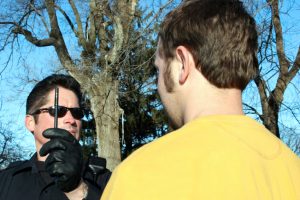 California police officers commonly use field sobriety tests to determine if a driver is impaired. Field sobriety tests such as the walk-and-turn test a driver’s coordination, balance, and motor skills all at once. These types of tests can occasionally show that a driver is impaired, but they are subjective exercises that are prone to errors. There are many reasons why even sober drivers can fail a field sobriety test and it is common for officers to see signs of impairment when there are none.